Tourism Competitiveness Overview
Uganda's tourism competitiveness is assessed across multiple dimensions including natural and cultural resources, infrastructure, human capital, and business environment, positioning the country within the regional and global tourism landscape.
The country demonstrates exceptional strength in natural resources, ranking among the top globally for biodiversity and unique wildlife experiences. However, opportunities exist for improvement in infrastructure development and digital readiness to enhance overall competitiveness.
Uganda's strategic focus on sustainable tourism and conservation has created a unique value proposition that differentiates it from regional competitors while building long-term competitive advantages.
Key Strengths
- Unique wildlife experiences
- Mountain gorilla trekking
- Competitive pricing
- Political stability
- Conservation leadership
East African Tourism Rankings
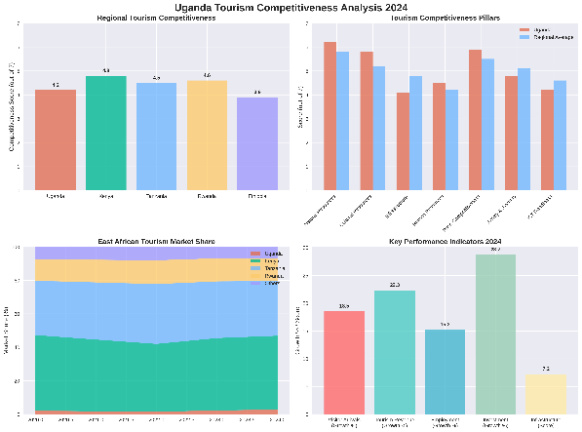
Uganda competes within the dynamic East African tourism market, where each country offers unique attractions and experiences. The regional comparison highlights Uganda's competitive position and growth potential.
Kenya
Rwanda
Tanzania
Uganda
Ethiopia
Uganda's Competitive Advantages
Unique Wildlife
Home to half of the world's mountain gorillas and diverse ecosystems in a compact area.
Value for Money
Competitive pricing compared to regional destinations with similar experiences.
Conservation Leadership
Recognized global leader in community-based conservation and sustainable tourism.
Authentic Experiences
Genuine cultural interactions and off-the-beaten-path adventures.
Performance Across Key Pillars
Tourism Competitiveness Key Pillars
The performance of each key pillar directly impacts Uganda’s competitiveness. Here’s how Uganda stands in comparison to the regional averages.
Natural Resources 6.2/7
Cultural Resources 5.8/7
Price Competitiveness 5.9/7
Safety & Security 4.8/7
Human Resources 4.5/7
ICT Readiness 4.2/7
Infrastructure 4.1/7
Pillar Performance Insights
Strengths & Improvement Areas
Strengths
- • Exceptional natural resources (6.2/7)
- • Rich cultural heritage (5.8/7)
- • Competitive pricing (5.9/7)
- • Growing human capital (4.5/7)
Improvement Areas
- • Infrastructure development (4.1/7)
- • ICT readiness enhancement (4.2/7)
- • Safety perception improvement (4.8/7)
- • Digital connectivity expansion
East African Tourism Market Share
Market Dynamics and Positioning
+33%
Market Share Growth (2022-2024)
4th
Regional Ranking Position
18.5%
Annual Growth Rate
Tourism Performance Metrics
Uganda's tourism performance indicators demonstrate strong growth across multiple dimensions, reflecting the sector's resilience and strategic development initiatives.
Visitor Arrivals Growth
18.5%
Tourism Revenue Growth
22.3%
Employment Growth
15.2%
Investment Growth
28.7%
Regional Performance Benchmarks
| Indicator | Uganda | Regional Average | Performance |
|---|---|---|---|
| Visitor Growth Rate | 18.5% | 12.3% | |
| Revenue per Visitor | $1,497 | $1,650 | |
| Average Length of Stay | 8.2 days | 7.5 days | |
| Repeat Visitor Rate | 22% | 28% | |
| Digital Engagement | 68% | 75% |
Strategic Opportunities and Challenges
Strategic Opportunities
- • Niche Market Leadership: Gorilla trekking and primate tourism
- • Regional Integration: East Africa Tourist Visa expansion
- • Sustainable Tourism: Global demand for eco-tourism
- • Digital Transformation: Online platform development
- • Infrastructure Development: Improved connectivity
- • MICE Tourism: Conference and events market
- • Adventure Tourism: Growing market segment
Key Challenges
- • Infrastructure Gaps: Limited road access to attractions
- • Digital Connectivity: Inconsistent internet coverage
- • Marketing Reach: Limited global brand awareness
- • Capacity Constraints: Peak season accommodation
- • Skills Development: Hospitality training needs
- • Regional Competition: Established destinations
- • Climate Vulnerability: Weather-dependent activities
Competitive Strategy Framework
Differentiation Strategy
- • Unique Wildlife Experiences: Mountain gorillas and diverse ecosystems
- • Conservation Leadership: Community-based conservation model
- • Authentic Cultural Experiences: Genuine community interactions
- • Adventure Tourism: White-water rafting, hiking, and exploration
- • Compact Geography: Multiple experiences in small area
Growth Strategy
- • Market Penetration: Increase share in existing markets
- • Market Development: Target new geographic segments
- • Product Development: New tourism products and experiences
- • Digital Transformation: Online presence and booking systems
- • Partnership Development: Regional and international collaborations
Future Competitiveness Outlook
2024-2025
Short-term Goals
- Improve infrastructure score to 4.5/7
- Increase market share to 3.2%
- Launch digital tourism platform
- Enhance safety perception
2025-2027
Medium-term Targets
- Achieve overall score of 4.8/7
- Capture 4.5% regional market share
- Establish regional tourism hub
- Develop MICE tourism capacity
2027-2030
Long-term Vision
- Rank among top 3 in East Africa
- Achieve 6% regional market share
- Global conservation tourism leader
- Sustainable tourism model
Experience Uganda's Competitive Advantage
Discover why Uganda is rapidly becoming East Africa's premier destination for unique wildlife experiences and sustainable tourism.